
How to Write a Standard Operating Procedure (SOP) That People Will Actually Use

Learn how to create practical SOPs that save time, improve consistency and are actually useful.
We've all been there.
Someone asks,
"How do I do this?"
And the answer is...
"Oh, I'll show you."
The problem?
That only works while the person who knows the answer is available.
If they're on holiday, off sick or leave the business, you've suddenly got a problem.
That's where Standard Operating Procedures (SOPs) come in.
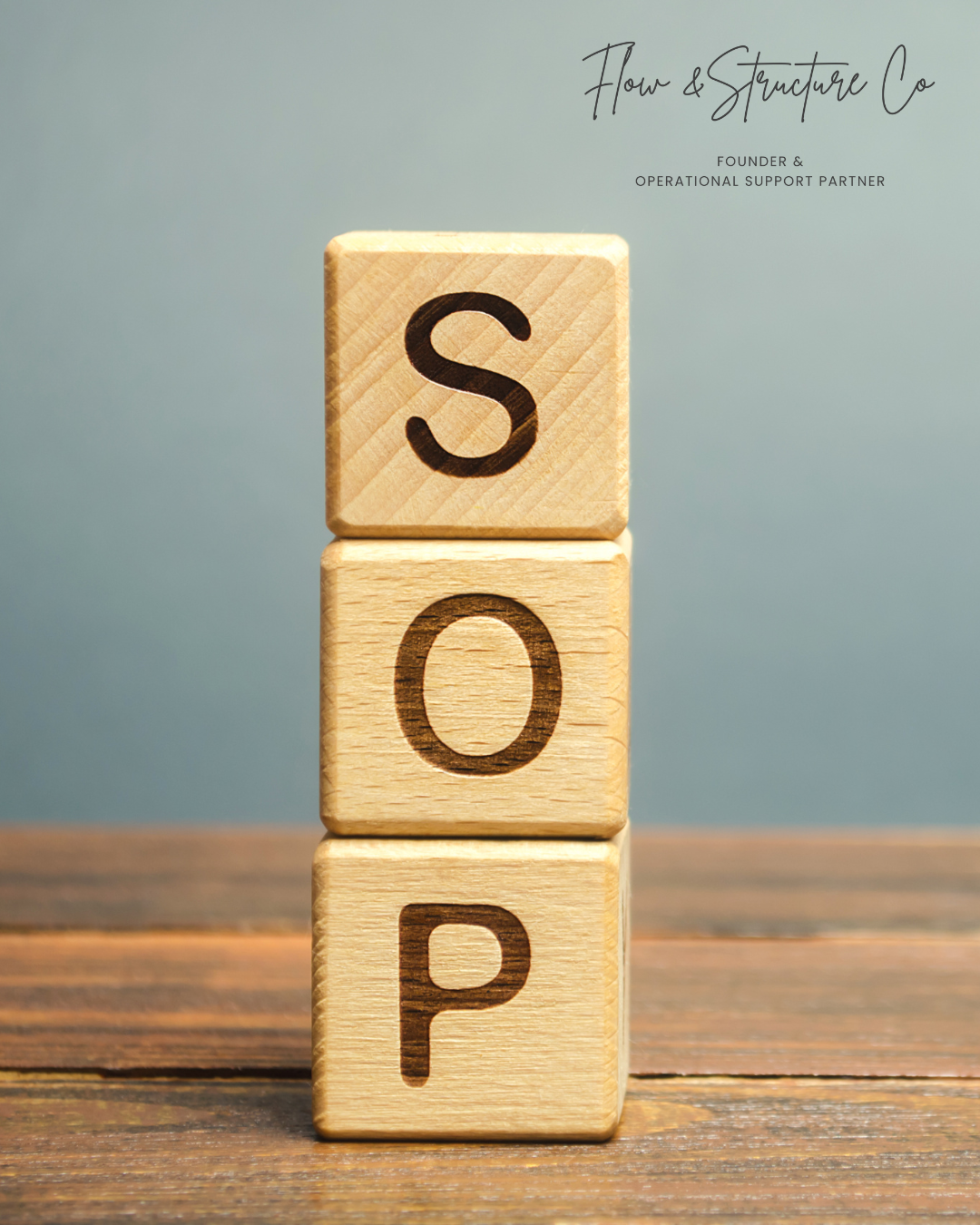
An SOP is simply a documented way of completing a task and the best ones are simple and easy to follow.
What should an SOP include?
A good SOP should explain:
What the task is.
Who is responsible.
When it needs to be completed.
The steps involved.
Any systems or software used.
Anything to check before marking it complete.
Think of it as instructions for Future You...
or anyone else who needs to complete the task.
Keep it simple
One of the biggest mistakes I see is people overcomplicating their SOPs.
Remember...
They're there to make life easier.
If someone can't follow it without asking lots of questions, it probably needs simplifying.

SOP’s are there to make life easier, keep it simple!
When should you create one?
A good rule of thumb is this:
If you've answered the same question more than twice...
It's probably worth creating an SOP.
It'll save you time in the long run and make your business far less reliant on memory.
Final thought
An SOP isn't about creating paperwork for the sake of it.
It's about making sure important knowledge doesn't only exist inside someone's head.
The easier it is for someone to follow a process, the easier it is for your business to run.

Working together I can help you create practical processes to save time and reduce firefighting.
If your business is relying on memory rather than documented systems, I'd love to help.
Together we can create practical processes that save time, reduce stress and make your business easier to run.