

How to Scale a Service Business without burning out
Growing your business shouldn't mean working longer hours or feeling constantly overwhelmed. Discover how improving your systems, processes and ways of working can help your business grow sustainably without burning yourself out.

Discover how improving your systems an help your business grow sustainably without burning yourself out.
There seems to be an unwritten rule in business that growth has to feel hard.
More clients.
More work.
More emails.
More pressure.
Almost as though feeling permanently overwhelmed is a sign you're doing something right.
Personally, I'm not convinced.
Don't get me wrong. There are always going to be busy periods when you're growing a business. That's completely normal.
What I'm talking about is that constant feeling of chasing your own tail.
You know the one...
You spend all day working, yet somehow your to-do list is longer at 5pm than it was at 9am.
Sound familiar?
Growth doesn't create problems. It usually exposes them.
When your business is small, it's surprisingly easy to work around little inefficiencies.
You know where that document is because you saved it.
You remember what you promised a client because you only have a handful of projects on the go.
You answer the same question three times because... well... it's only three times.
As your business grows, those little workarounds start becoming much bigger frustrations.
Not because anyone is doing anything wrong.
Simply because the business has outgrown the way it operates.

As businesses grow, our processes and skills also need to change and develop.
Before assuming you need to work harder...
It's worth asking yourself a few questions.
Are we repeating the same tasks every week?
Are important processes only in one person's head?
Is information easy to find?
Does everyone work in a consistent way?
Could we simplify anything before adding more work?
Sometimes the answer is bringing another person into the business.
Sometimes it's investing in training so your team can confidently take on more responsibility.
Sometimes it's introducing better systems or documenting your processes.
The important thing is understanding the real problem before deciding on the solution.
Better operations create better capacity
One of the biggest misconceptions I come across is that systems create more work.
In reality, good systems should remove unnecessary work.
They reduce decision fatigue.
They stop people reinventing the wheel.
They make it easier for everyone to know what's happening and what comes next.
Most importantly, they create space.
Space to focus on clients.
Space to develop your team.
Space to actually enjoy running your business again.
Good systems help your business manage its continued growth along with reducing decision fatigue
Growth should feel sustainable
Scaling isn't about making your business more complicated.
It's about making sure your operations evolve alongside your business.
Because the way you worked with five clients probably won't be the way you work with twenty.
And that's okay.
Growth is exciting.
Your operations simply need to grow with you.
Ready to make growth feel more manageable?
If your business is growing but things are starting to feel messy behind the scenes, an outside pair of eyes can often spot opportunities you've become too close to see.
A Discovery Call is a chance to talk through what's working, what's not, and where a few practical changes could make everyday work feel much easier.
I'd love to hear more about your business.
The Email Every Client Should Receive
A thoughtful welcome email does more than share information. It reassures new clients, sets expectations and creates a positive first impression from day one.
A well thought out welcome email does more than share information.
Winning a new client is always exciting.
They've chosen to work with you, they've signed on the dotted line and you're ready to get started.
Then comes one of the most overlooked parts of the client journey...
The first email.
It might seem like a small detail, but that first email often sets the tone for the entire relationship.
Why it matters
Put yourself in your client's shoes.
They've committed to working with you.
They're probably wondering:
What happens next?
When will I hear from you?
Is there anything I need to do?
How does the process work?
A good welcome email answers those questions before they even need to ask.
It replaces uncertainty with confidence and helps your clients feel looked after from the very beginning.

Think about things from the clients perspective, they’re likely wondering what are the next steps.
What should you include?
Your welcome email doesn't need to be long or overly formal.
It just needs to cover the essentials.
A simple structure might include:
A warm welcome and thank you.
Confirmation of what happens next.
Any information or documents you need from the client.
Timescales and key dates.
The best way to contact you.
Anything else that will help them feel prepared.
Think of it as the start of your client experience rather than just another admin task.
Keep it personal
Templates are useful, but don't let them become robotic.
Your clients should still feel like they're hearing from a real person.
A little warmth goes a long way.
Even something as simple as:
"I'm really looking forward to working with you."
can help build confidence and strengthen the relationship.

It’s important to build a client relationship from the outset, just remember that a little warmth goes a long way.
Small detail. Big impact.
People rarely remember every email they receive.
They do remember how a business made them feel.
A thoughtful welcome email tells your clients they're organised, valued and in safe hands.
And that's a pretty good way to start any working relationship.
Final thought
Your onboarding process doesn't begin with the work itself.
It begins with the experience you create from the moment someone says yes.
Sometimes the smallest touchpoints make the biggest difference.
If you're reviewing your client onboarding process and you're not sure where to start, I'd love to help.
Together we can create practical systems and processes that make life easier for both you and your clients.

How to Write a Standard Operating Procedure (SOP) That People Will Actually Use
A Standard Operating Procedure doesn't need to be complicated. Learn how to create practical SOPs that save time, improve consistency and are actually useful.
Learn how to create practical SOPs that save time, improve consistency and are actually useful.
We've all been there.
Someone asks,
"How do I do this?"
And the answer is...
"Oh, I'll show you."
The problem?
That only works while the person who knows the answer is available.
If they're on holiday, off sick or leave the business, you've suddenly got a problem.
That's where Standard Operating Procedures (SOPs) come in.
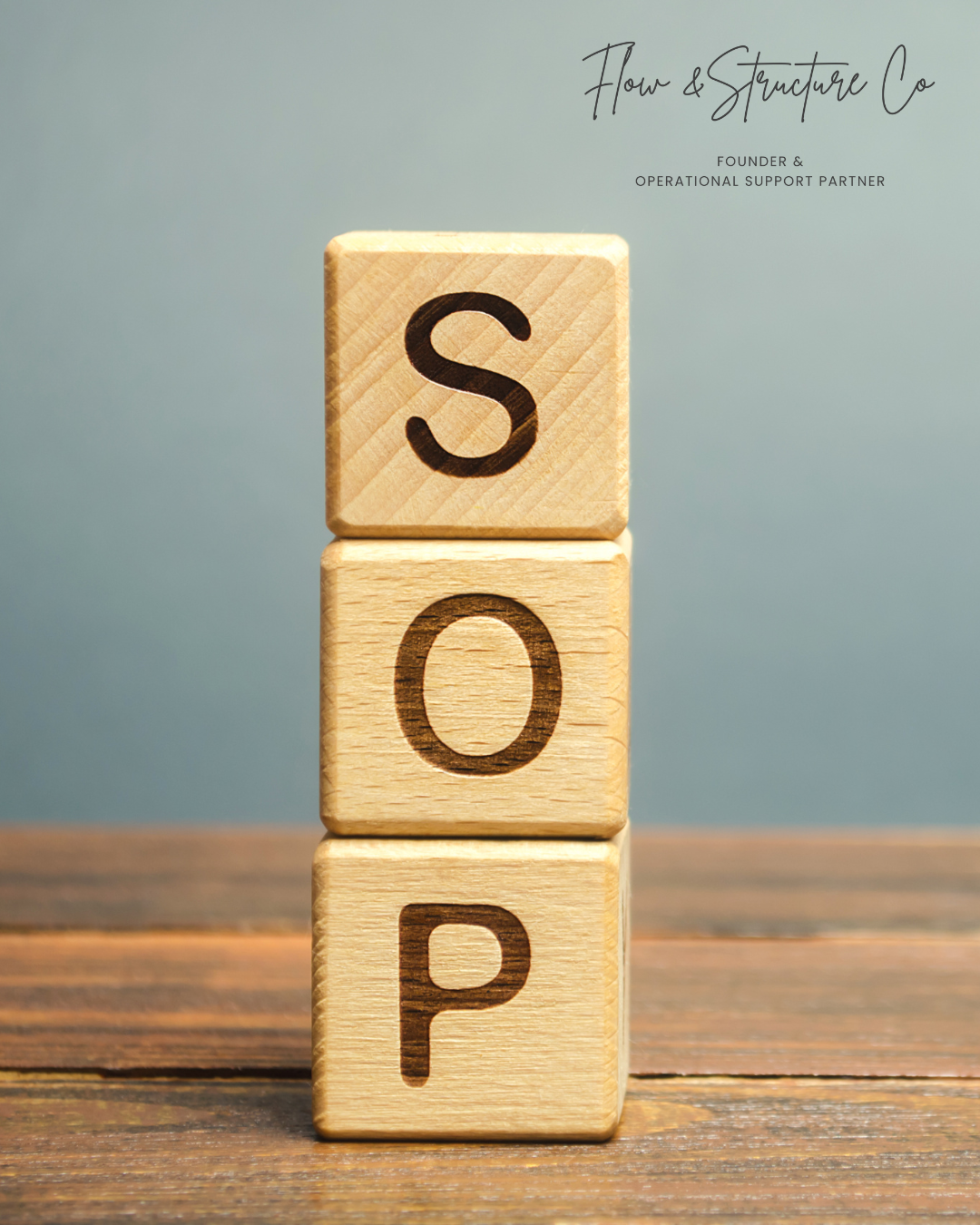
An SOP is simply a documented way of completing a task and the best ones are simple and easy to follow.
What should an SOP include?
A good SOP should explain:
What the task is.
Who is responsible.
When it needs to be completed.
The steps involved.
Any systems or software used.
Anything to check before marking it complete.
Think of it as instructions for Future You...
or anyone else who needs to complete the task.
Keep it simple
One of the biggest mistakes I see is people overcomplicating their SOPs.
Remember...
They're there to make life easier.
If someone can't follow it without asking lots of questions, it probably needs simplifying.
SOP’s are there to make life easier, keep it simple!
When should you create one?
A good rule of thumb is this:
If you've answered the same question more than twice...
It's probably worth creating an SOP.
It'll save you time in the long run and make your business far less reliant on memory.
Final thought
An SOP isn't about creating paperwork for the sake of it.
It's about making sure important knowledge doesn't only exist inside someone's head.
The easier it is for someone to follow a process, the easier it is for your business to run.
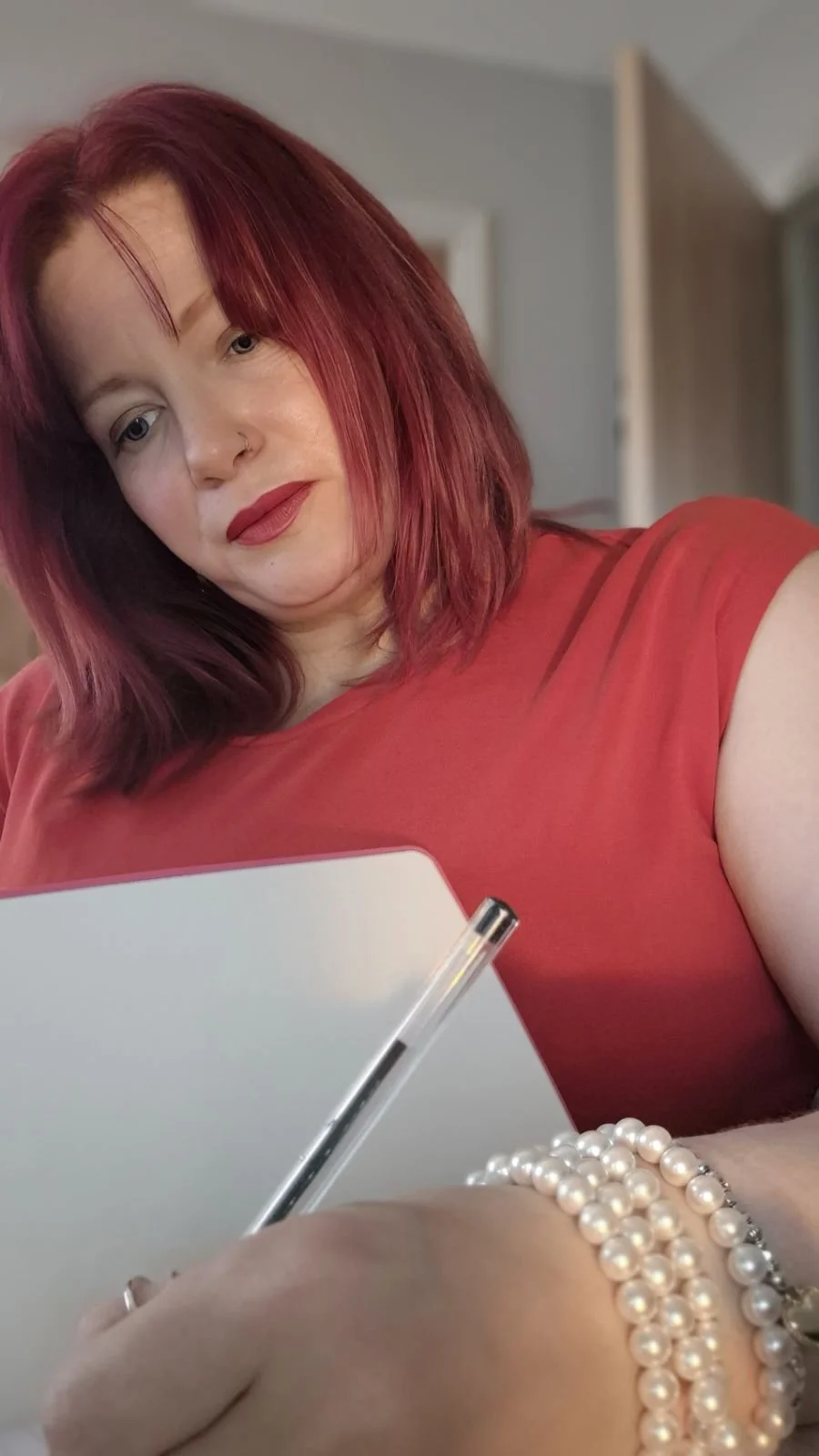
Working together I can help you create practical processes to save time and reduce firefighting.
If your business is relying on memory rather than documented systems, I'd love to help.
Together we can create practical processes that save time, reduce stress and make your business easier to run.

You're Not Disorganised. You're Carrying Too Much.
Feeling overwhelmed doesn't always mean you're disorganised. Discover how better systems can reduce stress, save time and help your business run more smoothly.
There comes a point in most businesses where everything starts to feel harder than it should.
You know what needs doing.
You know where you want the business to go.
But instead of making progress, your days are spent jumping between emails, answering questions, looking for documents, remembering tasks and trying to keep everything moving.
It's exhausting.
And if you're anything like the business owners I work with, you've probably had this thought at least once...
"I just need to get more organised."
The thing is...
I'm not convinced that's the real problem.

Good organisation isn't about remembering more. It's about creating systems that mean you don't have to.
The hidden workload no one talks about
When people think about workload, they usually think about the obvious things:
Client work
Meetings
Emails
Marketing
Admin
But there's another workload that often goes unnoticed.
The mental workload.
Trying to remember where you saved that document.
Wondering whether you've replied to that email.
Keeping a running to-do list in your head.
Being the only person who knows how a particular process works.
Stopping what you're doing every time someone has a question.
None of those tasks take hours on their own.
But together?
They create constant friction.
You're carrying your business in your head
One of the biggest patterns I've noticed is that many small businesses rely on memory instead of systems.
Not because they want to.
Because they've been busy.
Processes never got documented.
Files ended up being saved in different places.
Everyone developed their own way of doing things.
It works...
Until it doesn't.

Feeling overwhelmed doesn't always mean you're disorganised. Sometimes you're simply carrying too much. Here's why better systems make all the difference.
Better systems create breathing room
This isn't about creating endless paperwork or making your business more complicated.
It's about making everyday tasks easier.
Sometimes the smallest changes make the biggest difference.
A documented process.
A better file structure.
A CRM that's actually used properly.
A checklist that means nobody has to remember every step.
These things don't just save time.
They reduce decision fatigue.
They reduce stress.
And they give you the headspace to focus on growing your business instead of constantly reacting to it.
A question to ask yourself
Rather than asking:
"How can I become more organised?"
Try asking:
"What am I carrying that a system could carry instead?"
The answer might surprise you.
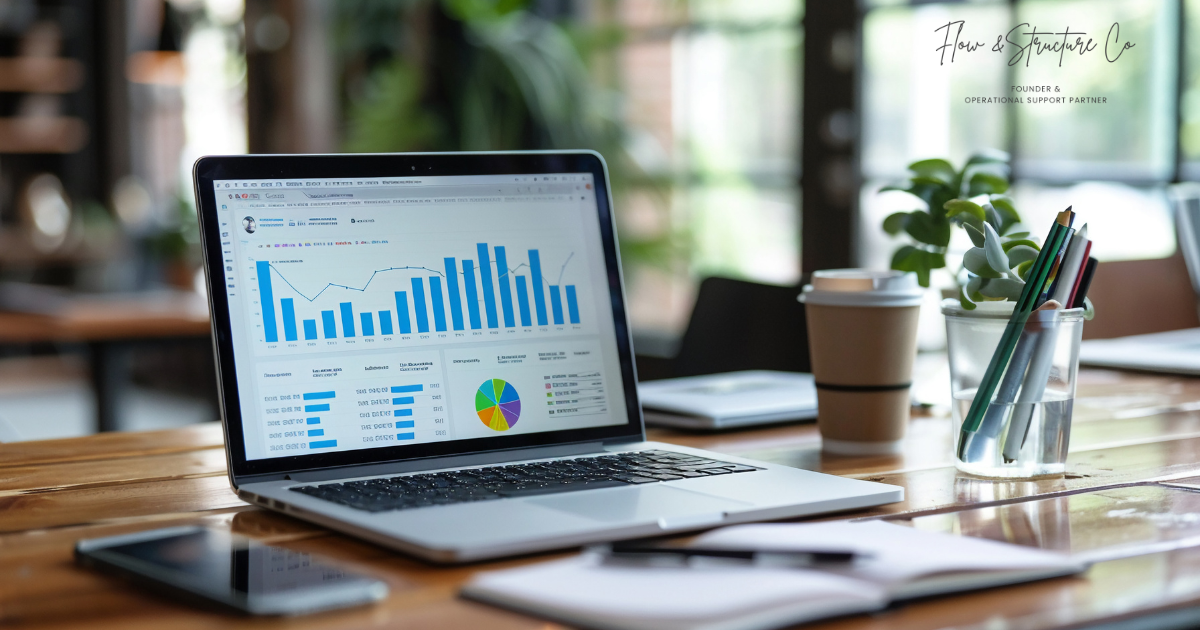
Discover how better systems can reduce stress, save time and create breathing room.
Final thought
If you've found yourself thinking "I just can't keep on top of everything anymore," it doesn't necessarily mean you're disorganised.
You might simply be carrying far more than one person should.
Sometimes the answer isn't working harder.
It's creating better systems so your business supports you, rather than the other way round.
If you're constantly thinking, "There has to be an easier way to do this," there probably is.
Sometimes a few simple changes to your systems and processes can make a huge difference.
If you'd like another pair of eyes on your business, I'd love to help.
Marie