

How to Write a Standard Operating Procedure (SOP) That People Will Actually Use
A Standard Operating Procedure doesn't need to be complicated. Learn how to create practical SOPs that save time, improve consistency and are actually useful.
Learn how to create practical SOPs that save time, improve consistency and are actually useful.
We've all been there.
Someone asks,
"How do I do this?"
And the answer is...
"Oh, I'll show you."
The problem?
That only works while the person who knows the answer is available.
If they're on holiday, off sick or leave the business, you've suddenly got a problem.
That's where Standard Operating Procedures (SOPs) come in.
An SOP is simply a documented way of completing a task and the best ones are simple and easy to follow.
What should an SOP include?
A good SOP should explain:
What the task is.
Who is responsible.
When it needs to be completed.
The steps involved.
Any systems or software used.
Anything to check before marking it complete.
Think of it as instructions for Future You...
or anyone else who needs to complete the task.
Keep it simple
One of the biggest mistakes I see is people overcomplicating their SOPs.
Remember...
They're there to make life easier.
If someone can't follow it without asking lots of questions, it probably needs simplifying.
SOP’s are there to make life easier, keep it simple!
When should you create one?
A good rule of thumb is this:
If you've answered the same question more than twice...
It's probably worth creating an SOP.
It'll save you time in the long run and make your business far less reliant on memory.
Final thought
An SOP isn't about creating paperwork for the sake of it.
It's about making sure important knowledge doesn't only exist inside someone's head.
The easier it is for someone to follow a process, the easier it is for your business to run.
Working together I can help you create practical processes to save time and reduce firefighting.
If your business is relying on memory rather than documented systems, I'd love to help.
Together we can create practical processes that save time, reduce stress and make your business easier to run.

You're Not Disorganised. You're Carrying Too Much.
Feeling overwhelmed doesn't always mean you're disorganised. Discover how better systems can reduce stress, save time and help your business run more smoothly.
There comes a point in most businesses where everything starts to feel harder than it should.
You know what needs doing.
You know where you want the business to go.
But instead of making progress, your days are spent jumping between emails, answering questions, looking for documents, remembering tasks and trying to keep everything moving.
It's exhausting.
And if you're anything like the business owners I work with, you've probably had this thought at least once...
"I just need to get more organised."
The thing is...
I'm not convinced that's the real problem.

Good organisation isn't about remembering more. It's about creating systems that mean you don't have to.
The hidden workload no one talks about
When people think about workload, they usually think about the obvious things:
Client work
Meetings
Emails
Marketing
Admin
But there's another workload that often goes unnoticed.
The mental workload.
Trying to remember where you saved that document.
Wondering whether you've replied to that email.
Keeping a running to-do list in your head.
Being the only person who knows how a particular process works.
Stopping what you're doing every time someone has a question.
None of those tasks take hours on their own.
But together?
They create constant friction.
You're carrying your business in your head
One of the biggest patterns I've noticed is that many small businesses rely on memory instead of systems.
Not because they want to.
Because they've been busy.
Processes never got documented.
Files ended up being saved in different places.
Everyone developed their own way of doing things.
It works...
Until it doesn't.
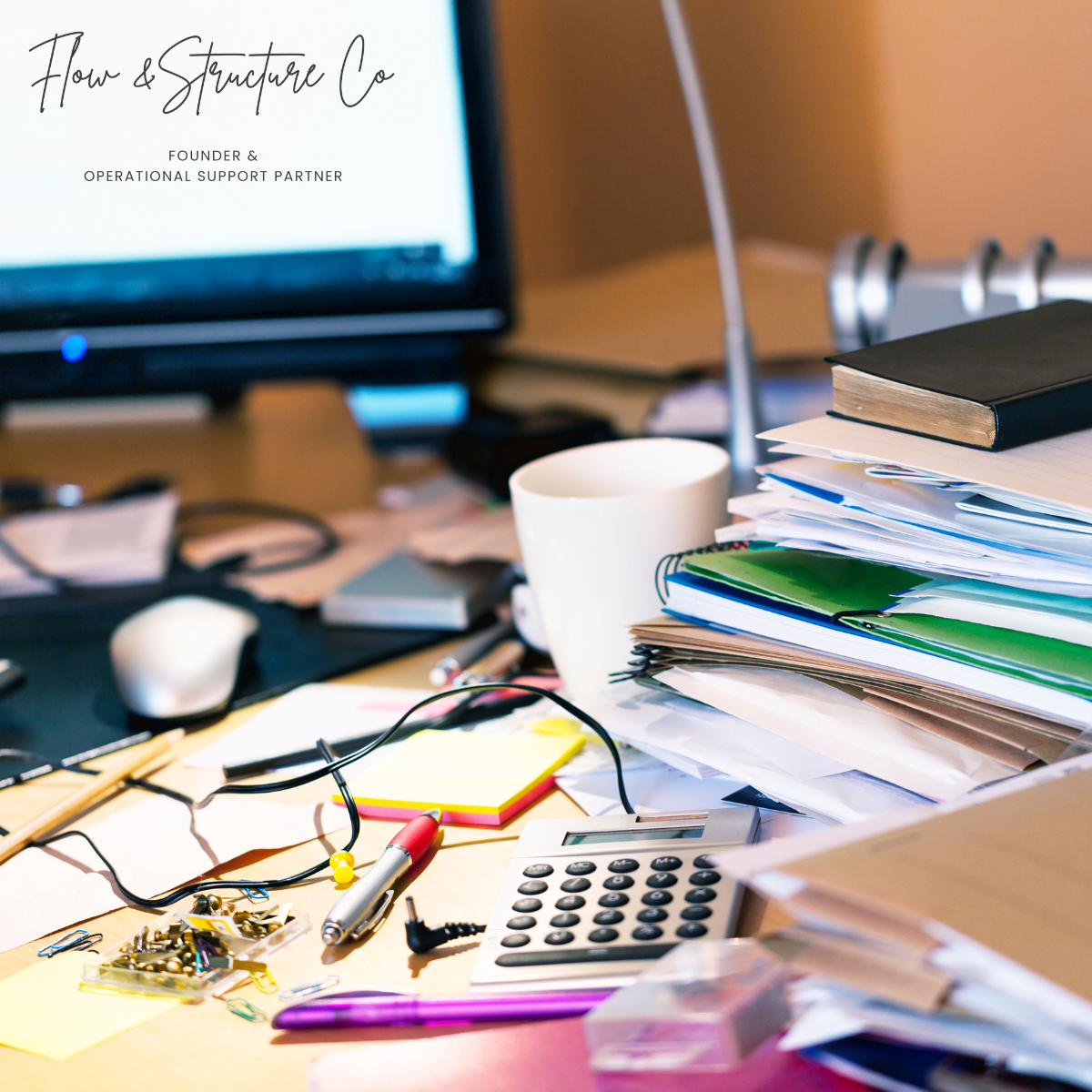
Feeling overwhelmed doesn't always mean you're disorganised. Sometimes you're simply carrying too much. Here's why better systems make all the difference.
Better systems create breathing room
This isn't about creating endless paperwork or making your business more complicated.
It's about making everyday tasks easier.
Sometimes the smallest changes make the biggest difference.
A documented process.
A better file structure.
A CRM that's actually used properly.
A checklist that means nobody has to remember every step.
These things don't just save time.
They reduce decision fatigue.
They reduce stress.
And they give you the headspace to focus on growing your business instead of constantly reacting to it.
A question to ask yourself
Rather than asking:
"How can I become more organised?"
Try asking:
"What am I carrying that a system could carry instead?"
The answer might surprise you.

Discover how better systems can reduce stress, save time and create breathing room.
Final thought
If you've found yourself thinking "I just can't keep on top of everything anymore," it doesn't necessarily mean you're disorganised.
You might simply be carrying far more than one person should.
Sometimes the answer isn't working harder.
It's creating better systems so your business supports you, rather than the other way round.
If you're constantly thinking, "There has to be an easier way to do this," there probably is.
Sometimes a few simple changes to your systems and processes can make a huge difference.
If you'd like another pair of eyes on your business, I'd love to help.
Marie